
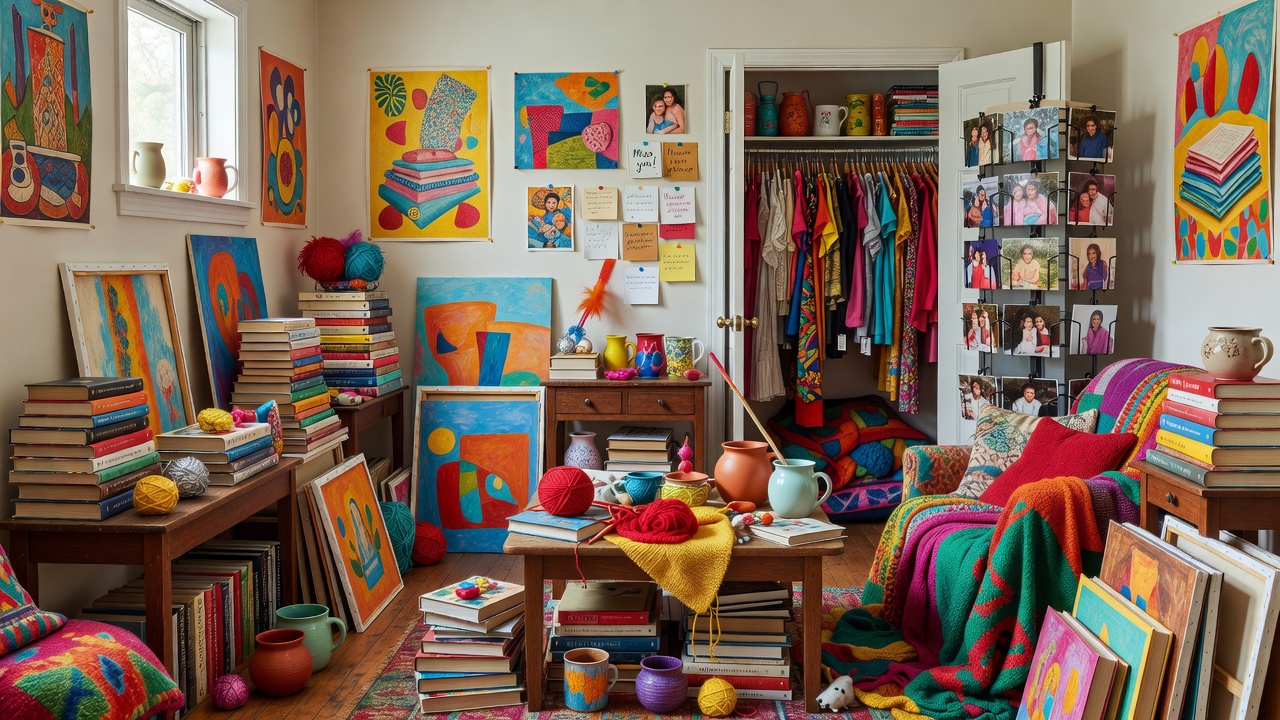
Overconsumption is usually defined as impulsive buying of items that add little value, but the line is personal and often blurry. A columnist's living room, filled with books, craft projects and a cat's toys, shows how the same space can read as either chaos or comfort depending on who is looking at it.
Why impulse buying feels normal
Many households now keep closets full of clothes that wear out quickly and shelves full of objects kept mainly for sentimental reasons. The source notes that buying on impulse has become increasingly normal, and that retailers have adjusted their marketing to match. The result is a pattern in which purchases accumulate faster than people decide what they actually need.
Sentiment versus excess
Sentimental objects are not the same as clutter, and the source draws that distinction carefully. A parent who keeps a child's paintings in a laundry room, for example, may be using them to brighten a dull chore rather than simply storing them. The question is less about how many things someone owns and more about whether each item still serves a purpose, whether practical or emotional.
Decor trends and personal space
The article describes dopamine decor, a style popularized on TikTok after the pandemic, which favors bright colors, nostalgic objects and personal collections. According to interior designer Evette Annadale of the Interior Design Institute, the approach works when it "celebrates personality, colour, and nostalgia while still feeling calm, expressive, and thoughtfully designed." Crowding that feels overwhelming in a small studio can feel appropriate in a larger room, which suggests that available space is a major factor in how people judge their possessions.
Practical takeaways for households
- Ask whether an item gives ongoing value, such as daily use, comfort or meaning, before buying it.
- Group collections on shelves or in a rotating display so they feel curated rather than scattered.
- Keep sentimental items in a planned place, and consider storage that protects them, as the source suggests with handwritten cards and checks.