
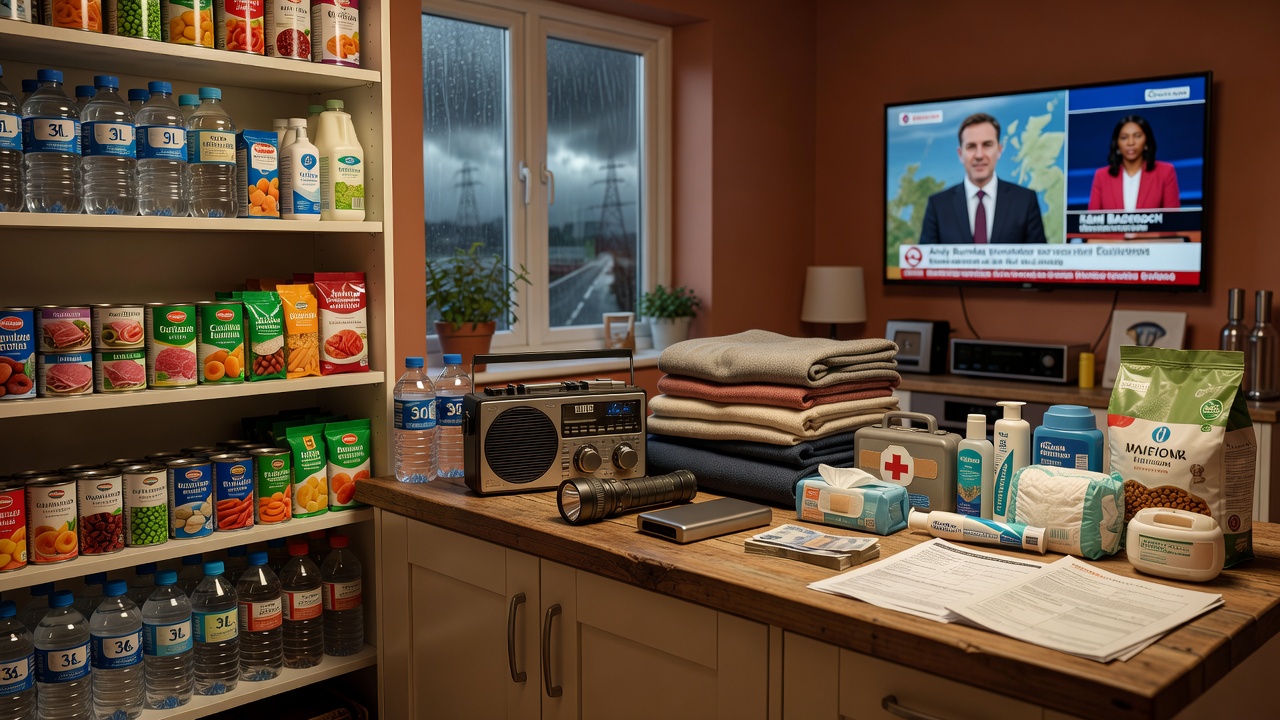
The British government has published a preparedness guide asking households to be able to get through the first 72 hours of a crisis without outside help. The advice follows storms and infrastructure disruptions, and it covers scenarios ranging from severe weather and power outages to cyber attacks, natural disasters and war. For American readers, the guide offers a useful model for thinking about household resilience, even though it comes from a different national system.
What the guide recommends
The core recommendation is a three-day stock of water and non-perishable food for every household. The guide suggests keeping 9 litres of bottled water per person for three days, along with long-lasting foods such as canned meat, canned vegetables and dried fruit. Officials were clear that the advice does not signal that a war is imminent. They framed it as a precaution against unexpected events that could interrupt daily life.
Beyond food and water, the guide lists a set of practical items:
- A battery-powered or wind-up FM radio, so people can receive official warnings during prolonged power or internet outages
- A flashlight, portable charger and blanket
- A first aid kit, cash, personal care products and baby supplies
- Pet food and copies of important documents
The radio recommendation rests on a specific point in the guide: during national emergencies, the BBC prioritizes health, safety and news announcements, so a radio that does not depend on the grid or the internet can be a key link to official information.
Why officials are raising the alarm
The guidance reflects concern about the resilience of everyday supply systems. The National Audit Office reported that the UK's food supply chain faces risks from the growing threat of cyber attacks and the climate crisis. The Cold Chain Federation separately pointed to security vulnerabilities in food transport and distribution, which matter because refrigerated and time-sensitive goods depend on tightly coordinated logistics. When those links break, shelves can empty quickly even without a shortage of raw food.
At a wildfire prevention summit in Liverpool, Prime Minister Andy Burnham said citizens need to be ready for crises that could disrupt daily life. He described the purpose of the call in these words: "It's not about panicking... It's about taking sensible measures to keep enough supplies at home to get through this period when a difficult situation arises."
Political debate and the limits of household preparation
The guidance has drawn criticism. Conservative Party leader Kemi Badenoch argued that asking families to stockpile is not enough on its own. Her words were: "Families can stockpile, but what is happening with defense, cyber attacks, hybrid warfare? The resources needed to protect the country have not been provided." Her remarks reflect a broader argument that personal preparedness complements, but cannot replace, national investment in defense, cyber security and infrastructure.
For households, the practical takeaway is modest. A three-day supply of water, shelf-stable food, a battery radio and basic medical and document supplies can make a difficult stretch more manageable. Readers should check the official guidance for current details, and they should rotate stored food and water on a regular schedule so that supplies remain usable when they are needed.