
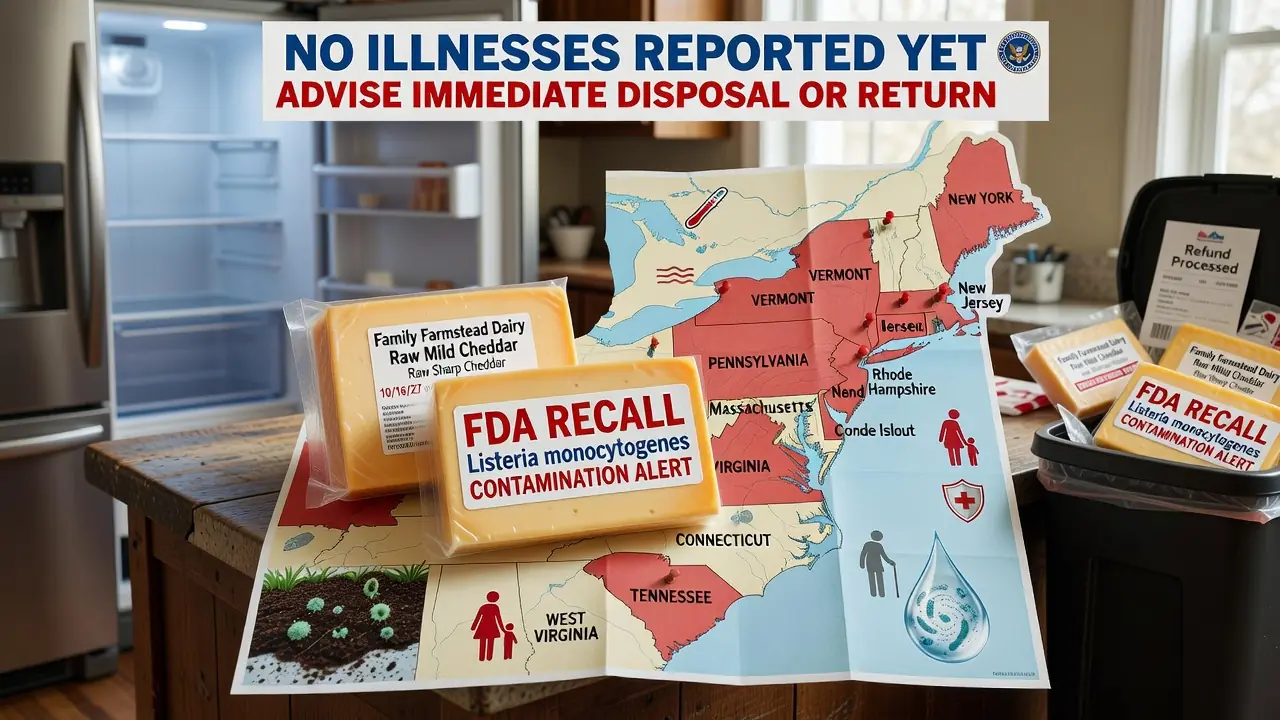
Family Farmstead Dairy, based in Worcester, New York, is recalling all of its raw mild and raw sharp cheddar cheese in eight-ounce plastic-wrapped packages because of possible contamination with Listeria monocytogenes. Shoppers who bought these products should throw them out or return them to the store for a refund. No illnesses linked to the recall have been reported so far.
Which Products and Lot Codes Are Affected
The recall covers two items: Raw Mild Cheddar and Raw Sharp Cheddar, both sold in eight-ounce plastic wrapping. According to the U.S. Food and Drug Administration, every lot code dated 10/16/27 and earlier is included. Check the packaging before you assume a package is safe, especially if the cheese was bought from a store in one of the affected states.
The products were distributed to retailers in New York, New Jersey, Vermont, New Hampshire, Massachusetts, Pennsylvania, Rhode Island, Connecticut, Virginia, West Virginia, and Tennessee.
Why Listeria Is a Concern in Cheese
The FDA describes Listeria monocytogenes as a disease-causing bacterium found in soil, water, sewage, decaying plant matter, and animals. It can survive and even grow at refrigerator temperatures, which is why keeping cheese cold does not eliminate the risk. Contamination can occur when food production conditions are unsanitary.
When people eat contaminated food, they may develop listeriosis. Symptoms include high fever, nausea, headaches, and abdominal pain. Healthy adults may experience only brief illness, but the infection can be fatal for young children, frail people, and older adults. In pregnant women, it can cause miscarriage or stillbirth.
What to Do If You Have the Cheese
- Check the package for the product name, eight-ounce size, and a lot code dated 10/16/27 or earlier.
- If it matches, do not eat it. Throw it away promptly, and wipe down the refrigerator shelf where it was stored.
- Bring the package back to the place of purchase to request a refund.
- If you feel unwell after eating this cheese, especially if you are pregnant, older, or immunocompromised, contact a healthcare provider and mention the recall.
What the Recall Does and Does Not Tell Us
The recall notice addresses specific products sold in specific states, and it names the bacterium as the reason. It does not report confirmed illnesses, so the scope of any harm is currently unknown. Check the FDA's recall notices for updates if you have questions about other dairy products or additional lot codes.